A CHRO playbook for engaging and retaining talent in 2026 — community-first retention, the four-metric scorecard, and a 90-day rollout. With Wyndham, HEINEKEN, and McKinsey data.
Engaging and retaining talent is no longer an HR sub-process. It's a board-level capability — and the gap between companies that treat it that way and those that don't is widening every quarter. Voluntary attrition is up, replacement costs have crossed half a salary in most knowledge-work roles, and the next generation of talent has stopped responding to the levers that worked five years ago.
This is a CHRO playbook for what comes next: how strategic employer branding, talent communities, and skills-based engagement combine into a retention model that actually holds. We'll show you the math, the mechanisms, and a 90-day plan you can put in front of your CEO on Monday.
What you need to know in 60 seconds
- → Replacing a salaried employee now costs 50–200% of annual compensation, according to SHRM and Gallup — and the curve is steeper for Gen Z hires who leave inside 18 months.
- → Compensation lifts have flattened. McKinsey's 2024 Great Attrition research shows three of the top five reasons employees quit are non-financial — belonging, growth, and meaningful work.
- → The CHROs winning this cycle are running a community-first retention model: branded talent communities that engage employees, alumni, and warm candidates as a single pipeline.
- → Five mechanisms make this work — visibility, peer signal, skills progression, alumni gravity, and re-recruitment moments. None of them require a comp adjustment.
- → Track retention with a four-metric CHRO scorecard: regretted attrition rate, internal mobility ratio, alumni rehire rate, and engagement-to-retention coefficient.
- → Wyndham Hotels' Jobful deployment didn't just deliver a 290% applicant lift — it doubled their internal mobility rate inside the first year.
The retention math has changed — and CFOs are noticing
Voluntary attrition is no longer a soft cost. It's a line item the finance team can model — and that's exactly what's happening across every executive committee we work with.
The numbers tell the story. According to the Society for Human Resource Management, replacing a salaried employee now costs between 50% and 200% of annual compensation when you factor in recruiting, onboarding, lost productivity, and team disruption. Gallup's most recent State of the Global Workplace report puts the global engagement rate at 23% — which means roughly three quarters of your workforce is, by definition, ready to leave.
For a 2,000-person organisation with 15% voluntary turnover and an average salary of €55,000, that's a €16M to €66M annual leak. CFOs are asking CHROs to close it. The old playbook — annual comp reviews, generic engagement surveys, exit interviews after the fact — was built for a different labour market.
Cost to replace a salaried employee, as a share of annual compensation
SHRM
Global employee engagement rate — three out of four employees are disengaged
Gallup, State of the Global Workplace 2024
Top reasons employees quit are non-financial — belonging, growth, meaning
McKinsey, Great Attrition 2024
Why compensation alone stopped working as a retention lever
Comp matters, but it's a hygiene factor — necessary, not sufficient. Once base pay clears the market median, every additional euro returns less in retention than the one before it.
McKinsey's 2024 Great Attrition research surfaced something most CHROs already feel in their bones: when employees were asked why they left, three of the top five reasons had nothing to do with money. People left because they didn't feel valued by their manager. They left because they didn't feel a sense of belonging. They left because the work no longer felt meaningful.
LinkedIn's 2024 Workplace Learning Report adds another data point. Employees who feel their company invests in their skills are 3.5x more likely to stay past two years. That's a non-comp lever with a bigger pull than most retention bonuses you can authorize.
What's working in 2026
- ✓ Visible internal mobility paths
- ✓ Peer recognition embedded in daily workflow
- ✓ Skills-based progression with proof-of-skill assessments
- ✓ Branded talent communities that include current employees
- ✓ Manager-quality investment over generic engagement programs
What's stopped working
- ✗ Annual comp adjustments as the primary retention tool
- ✗ Generic pulse surveys without action loops
- ✗ Exit interviews as the first signal of disengagement
- ✗ Career sites that talk to candidates but ignore employees
- ✗ Treating alumni as a closed chapter instead of a pipeline
The community-first retention model — what changes when belonging beats benefits
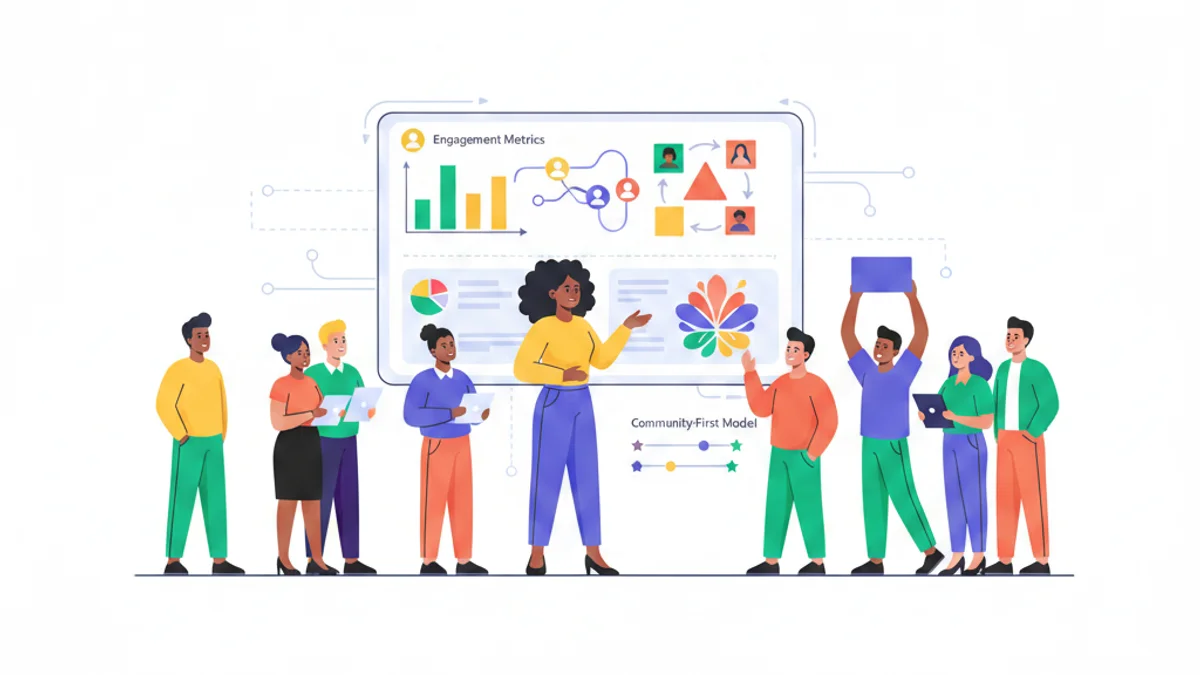
The CHROs winning this cycle have stopped treating retention as a downstream HR metric. Instead, they're running a community-first retention model — a branded talent community that engages employees, alumni, and warm candidates as a single, continuously visible pipeline.
Think of it as a strategic employer branding asset that doesn't stop at the offer letter. The same platform that nurtures candidates pre-hire becomes the place where current employees see internal opportunities, complete skills challenges, get peer recognition, and stay connected to colleagues who've moved roles. The same platform keeps alumni warm so the door swings both ways.
Why does this work? Because it changes the daily experience of being an employee. Visibility goes up. Friction goes down. Growth becomes legible. And when growth is legible inside the company, employees stop scanning LinkedIn for it.
Definition: Community-first retention model
A retention strategy that uses a branded talent community as the primary engagement channel for employees, alumni, and active candidates — replacing the disconnect between recruiting and people operations with a single, continuous loop.
Where traditional HR tech treats hiring, engagement, and offboarding as separate systems, a community-first model treats them as moments inside one continuous talent relationship.
Five mechanisms that make community engagement reduce attrition
When this model works, it works because of five specific mechanisms. Each one targets a known driver of voluntary attrition — and none of them require you to move base comp.
Visibility — every internal opportunity surfaces inside the community
Employees who can see internal roles before they go external don't have to leave to grow. Most companies still post jobs externally first, signalling — accidentally — that internal candidates are a backup plan.
Inside a Jobful talent community, every opening has a 7-day internal-first window with skills-based matching. That single change pushes internal mobility from 8–12% (industry baseline) toward the 25–30% range that high-retention companies post.
Peer signal — recognition becomes a public, durable artifact
Recognition that lives inside a manager's email or a Slack message decays. Recognition that lives inside a skills profile inside a community accumulates — and becomes the thing employees show their next manager.
Workhuman's research shows employees who receive frequent peer recognition are 5x more likely to stay past three years. Public, structured recognition compounds. Private recognition evaporates.
Skills progression — gamified assessments replace vague growth conversations
Most growth conversations fail because neither side has a shared definition of progress. Gamified skills assessments — the kind embedded inside a talent community — turn that conversation into a chart with a coordinate.
When employees can take a 12-minute behavioural challenge and see exactly which competencies they're closing the gap on, growth stops being a feeling and becomes a fact. Manager conversations get shorter and better.
Alumni gravity — the door swings both ways
Boomerang hires are 30–40% cheaper to source, ramp 2x faster, and bring outside-context that strengthens teams. The CHROs running community-first models keep alumni inside the talent community, with curated role alerts and event invitations.
When current employees see colleagues come back — visibly, on the same platform — leaving stops feeling like a permanent statement. It feels like a phase.
Re-recruitment moments — the 18-month conversation
For Gen Z hires especially, the 14–18 month mark is the high-risk window. The CHROs winning here run a structured re-recruitment moment at month 15: a manager-led conversation tied to a fresh skills assessment, a new project assignment, and an explicit growth offer.
It's not a check-in. It's a deliberate intervention designed to reset the engagement clock — before the LinkedIn scroll starts.
How to operationalize this at the team level — a CHRO playbook
Strategy decks don't retain anyone. The translation from CHRO ambition to first-line manager behaviour is where most retention programs die. Here's how to bridge that gap without adding new processes.
The mistake most companies make is layering retention on top of existing manager workload. The community-first model works because it replaces low-value activities — quarterly surveys nobody acts on, performance reviews that feel ceremonial — with higher-signal moments inside the platform employees already use.
Three rules for the operating model:
Make managers the primary owners — not HR
Retention KPIs roll up to managers. HR provides the platform, the data, and the playbook. The community gives managers a continuous read on their team's engagement signal — not a dashboard they check once a quarter.
Run skills challenges quarterly — not annually
A 12-minute gamified assessment every quarter reveals more about competency growth than an annual review. It also keeps the community active, which is the precondition for everything else.
Internal-first hiring as a default, not a policy
Every requisition opens internally for seven days inside the community before it goes external. The match score is visible to managers, the candidate, and the talent acquisition team. This single rule moves the needle on internal mobility faster than any L&D program.
Measuring retention impact — the four-metric CHRO scorecard
If you can't measure it, your CFO won't fund it twice. The community-first retention model has four metrics that matter at the executive level — track these and the rest is detail.
Most CHROs over-track. They report on 30+ engagement metrics, and the board glazes over by metric eight. Strip it down to four. These are the ones that move and that the CFO will actually look at.
| Metric | What it measures | 2026 target |
|---|---|---|
| Regretted attrition rate | Voluntary departures of high-performers — the only attrition number that matters financially | < 8% annually |
| Internal mobility ratio | % of openings filled by internal candidates — the single best leading indicator of retention | > 25% |
| Alumni rehire rate | % of new hires who are returning alumni — proxy for brand health and community engagement | > 12% |
| Engagement-to-retention coefficient | Correlation between active community participation and 24-month retention by team | > 0.6 correlation |
How Wyndham Hotels turned a 290% applicant lift into a retention story
The headline metric is well known — Wyndham Hotels saw a 290% increase in applicants after launching their Jobful-powered talent community. The story most people miss is what happened inside the company afterward.
Hospitality is a textbook hard-retention sector. Shift workers, multilingual teams, franchise structures, and turnover rates that historically run 70–80% annually. Wyndham didn't just need more candidates — they needed a way to convert the talent already inside their network into longer tenures.
By treating their talent community as the engagement layer for current employees and alumni — not just external candidates — Wyndham doubled their internal mobility rate inside year one. The same platform that brought 290% more applicants in the front door also kept their best people from walking out the side. That's the community-first retention model in production.
Three signals worth borrowing from Wyndham's deployment
1. Multilingual community design. When employees engage in their preferred language, participation triples. Wyndham's community runs in 6 languages.
2. Franchise-friendly structure. Local ownership of community engagement at the property level — corporate provides the platform, properties run the relationships.
3. Skills-based career maps. A front desk associate can see exactly what competencies separate them from a guest services manager — and complete the assessments without leaving the platform.
Your 90-day implementation roadmap
Don't try to boil the ocean. The CHROs who successfully launch this model do it in 90 days, with three clear phases — diagnose, deploy, demonstrate.
Here's the plan we recommend, based on rollouts across HEINEKEN, Wyndham, Raiffeisen Bank, and Regina Maria.
Days 1–30: Diagnose your retention reality
Pull the four scorecard metrics for the last 24 months. Segment by tenure band, function, and manager. Identify the regretted attrition concentration — usually 70% of the loss is in 30% of the teams.
Run a structured manager-quality audit on the high-loss teams. This is where the EVP gap lives.
Days 31–60: Deploy the talent community spine
Launch the branded talent community with three constituencies seeded: current employees, recent alumni (last 24 months), and active candidates. Roll out the internal-first requisition rule.
Run the first quarterly skills challenge. This is where you generate baseline data for the engagement-to-retention coefficient.
Days 61–90: Demonstrate impact to the executive team
Report the first-quarter movement on internal mobility, community engagement rate, and alumni rehire rate. These move fastest. Regretted attrition lags 12–18 months — set that expectation early.
Lock in the year-one retention KPI on the executive scorecard. Without that step, the program reverts to an HR initiative inside two years.
FAQ
What's the single most important metric for engaging and retaining talent?
Regretted attrition rate — the percentage of high-performers who leave voluntarily. It's the only attrition number with a real financial impact. Internal mobility ratio is the best leading indicator: when internal mobility climbs above 25%, regretted attrition typically drops 30–40% inside 18 months.
How do you retain Gen Z talent without raising compensation?
Gen Z responds to visible growth, peer recognition, and meaningful work — not just salary. Build a structured re-recruitment moment at month 15, run quarterly gamified skills challenges, and make internal mobility paths visible. McKinsey's data shows three of the top five reasons Gen Z employees quit are non-financial.
Is a talent community different from an employee engagement platform?
Yes. An employee engagement platform talks to current employees only. A branded talent community treats employees, alumni, and warm candidates as a single relationship — which is what makes the alumni gravity and re-recruitment mechanisms work. The same platform that drives 290% more applicants also reduces voluntary attrition.
How long before retention numbers actually move?
Engagement and internal mobility move in 60–90 days. Regretted attrition lags 12–18 months because it's a tenure-based metric. Set this expectation with the executive team upfront — otherwise the program gets killed at the 6-month review when the lagging metric hasn't moved yet.
Who owns retention — HR or line managers?
Line managers own retention outcomes; HR owns the platform, data, and playbook. When HR owns retention KPIs alone, retention becomes a side project nobody is accountable for. Make managers' retention rate part of their performance review — that single change shifts the conversation faster than any program.
How does strategic employer branding connect to retention?
Strategic employer branding doesn't stop at the offer letter. The same EVP that attracts candidates is the EVP that current employees experience day-to-day. When the external brand promise and the internal employee experience drift apart, retention collapses. A community-first model keeps both sides aligned because they live on the same platform.
Ready to put a community-first retention model in front of your CEO?
Jobful's branded talent community platform powers the engagement, mobility, and alumni mechanisms that move retention numbers — at companies like Wyndham Hotels, HEINEKEN, and Raiffeisen Bank.
Frequently Asked Questions
Get More Insights Like This
Join 5,000+ HR professionals receiving monthly insights.